
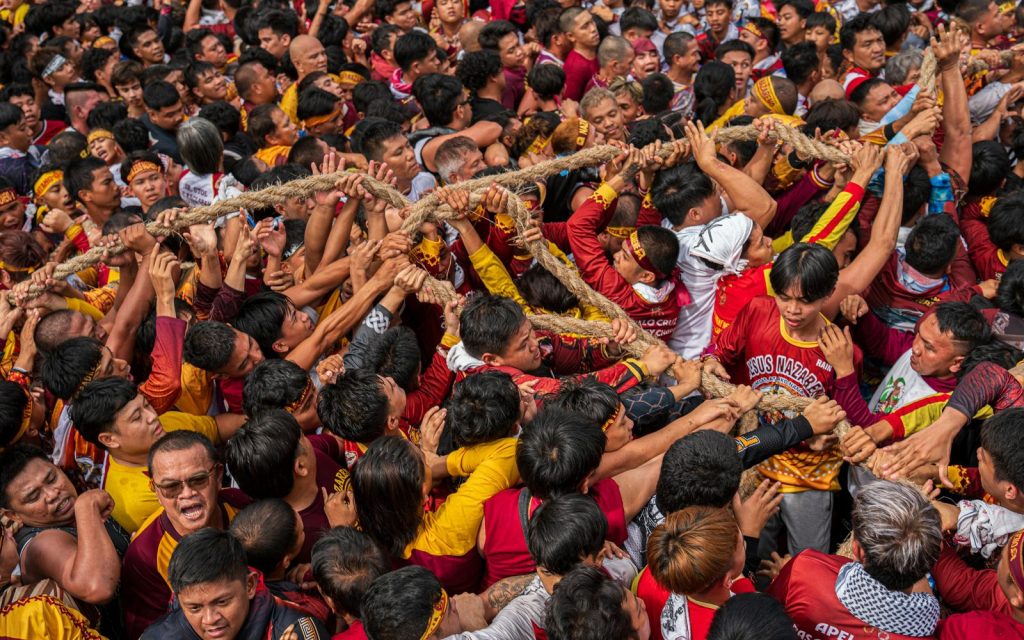
The procession of the Black Nazarene on 9 January is one of the largest religious gatherings in the world. The image is pulled on a carriage through the streets of Quiapo by two thick ropes, and the devotees who hold them do so for hours.
Many are fulfilling a vow: a prayer answered, a family member healed, a promise made years ago. They walk barefoot, as a sign of humility.
“My father held the rope. Now I do, and next year my son will.”
The procession has changed over the years, with shorter routes and more marshals to keep people safe. What has not changed is the devotion on the rope.
The night before
Devotees begin gathering at the Quirino Grandstand the day before the procession, many sleeping in the open. Volunteers hand out water, and medical teams set up stations along the route.
When the carriage moves, the crowd surges forward and back with it. Those who reach the rope often hold on for a few minutes before letting others take their place; some throw towels to the marshals to be wiped on the image and thrown back.
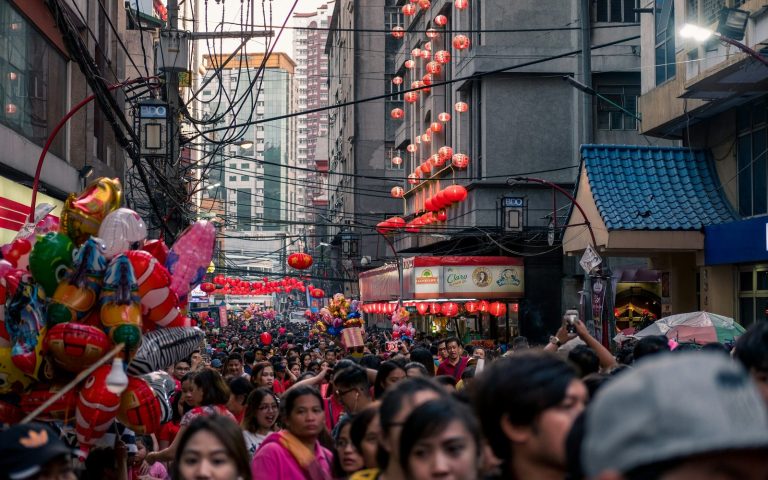
For anyone watching rather than taking part, the side streets near the church offer a safer view and a better sense of how the neighbourhood prepares for the day.
Why it matters
The Black Nazarene is a wooden image of Christ carrying the cross, brought to Manila from Mexico in the early 1600s. Devotees believe it has the power to heal, and the procession marks its transfer to Quiapo Church.
For many families the day is as much about community as faith. Neighbours walk together, share food along the route and look out for each other in the crowd. Children learn the songs and the prayers by walking beside their parents.
If you go, go early, go light and follow the instructions of the volunteers.