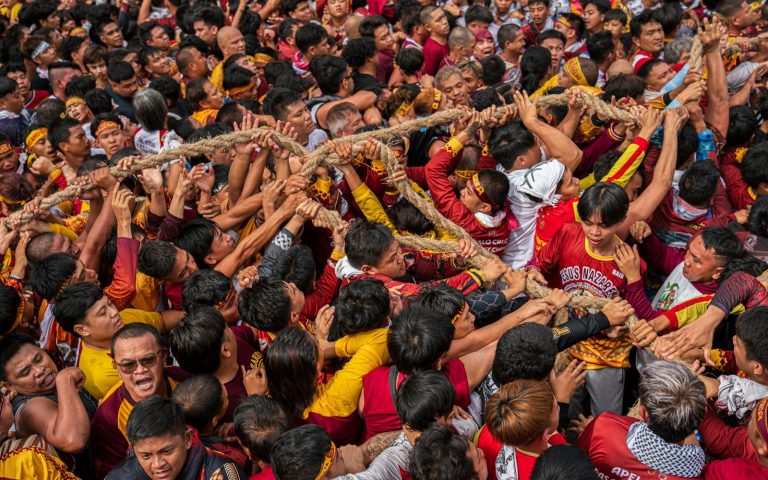

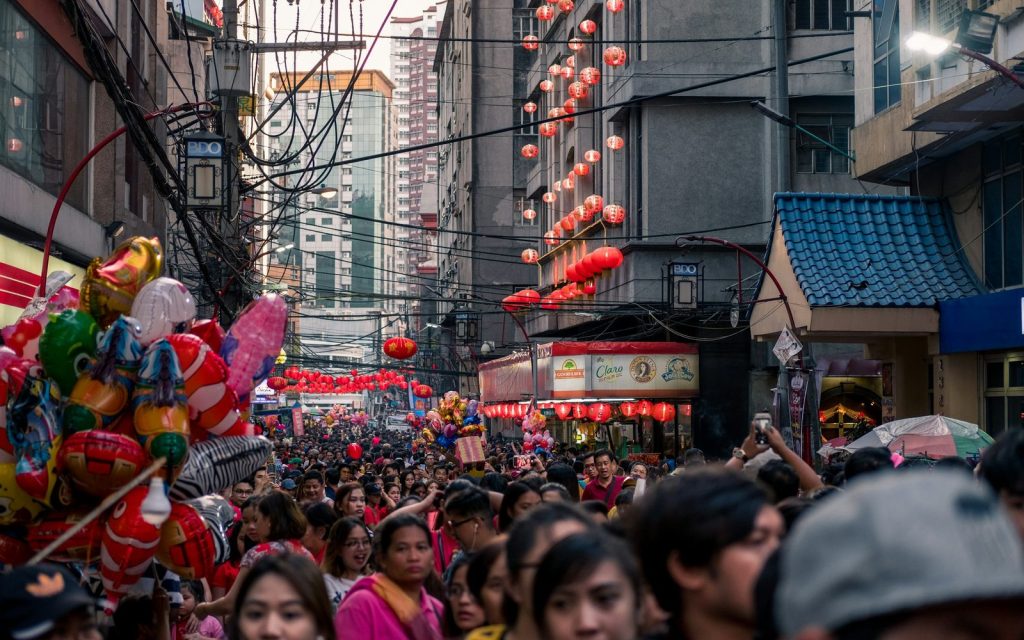
Chinese New Year turns Binondo into the city’s biggest street party. Red lanterns hang over Ongpin Street, dragon and lion dancers move from shop to shop, and stalls sell lucky charms, tikoy and fruit.
Getting there
Take the LRT to Carriedo and walk over the bridge. Driving is not worth it; most streets close by mid-morning.
What to expect
The dancers visit businesses to bring luck for the year, so follow the drums. The crowd is thickest on Ongpin around noon; side streets are calmer and have the same food.
What to eat
Tikoy, the sticky rice cake, is the gift of the season: buy it in a box, slice it, dip it in egg and fry it at home. Hopia and machang are good snacks for the walk, and every restaurant on Ongpin has a festive set menu.
If you want a sit-down meal, book ahead or go before eleven. Most places fill up by noon and stay full until the evening.
The celebrations continue for several days, so if the main day is too crowded, go the weekend after. The lanterns stay up, the food is the same and the streets are calmer.
The meaning of it
For Filipino-Chinese families, the new year is a time to visit relatives, pay off debts and start fresh. Red is everywhere because it is believed to bring luck, and gifts of money in red envelopes are given to children and unmarried relatives.
Binondo’s celebration has become a festival for the whole city, but it is still rooted in the families who live and work there. Many shops close for a few days afterwards, so the day itself is the best time to visit.
Arrive early, stay hydrated and keep the drums in earshot; that is where the dancers will be.
Wear something red, carry small bills and keep your bag in front of you.